
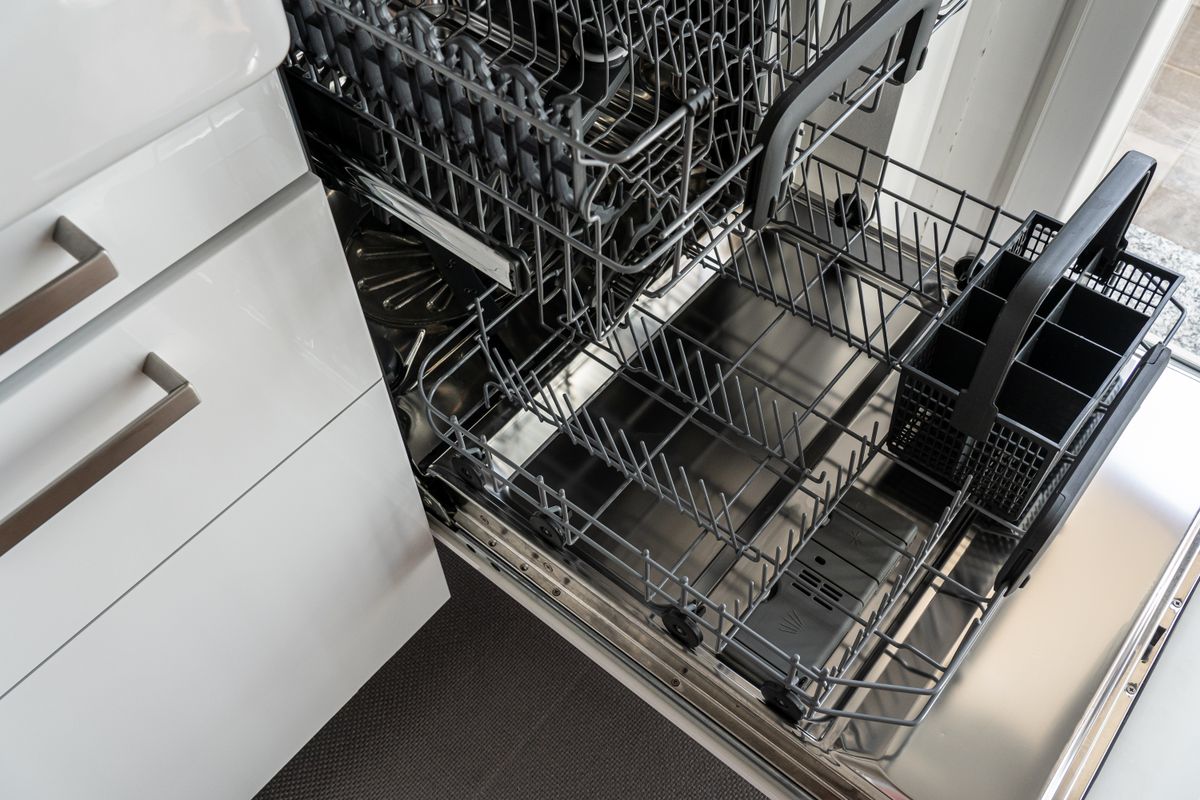
A dishwasher that refuses to drain is one of the most common appliance problems homeowners face. You run a full cycle, hear it finish, and open the door to find dirty water pooled across the bottom of the tub. The dishes may look clean on top, but they have been sitting in standing water the entire rinse phase. The good news is that the cause is usually something straightforward. This guide covers the five most frequent reasons a dishwasher fails to drain, what you can safely inspect yourself, and when it makes sense to call a licensed technician.
1. Clogged Filter or Food Trap
Every modern dishwasher has a filter assembly at the bottom of the tub designed to catch food particles and prevent them from recirculating onto your dishes. Over time, grease, bits of food, and small debris build up on the filter mesh. Once the filter is clogged, water cannot flow through to the drain pump, and it sits in the tub after every cycle.
What to check
Remove the bottom dish rack and locate the cylindrical filter at the center of the tub floor. Most filters twist out counterclockwise. Pull it out and rinse it under warm running water, using a soft brush to scrub away any stuck-on residue. While the filter is out, check the sump area beneath it for broken glass, food debris, or anything else blocking the opening. Replace the filter, making sure it locks back into place.
Most manufacturers recommend cleaning the dishwasher filter every one to two months, depending on how often you run the machine. Scraping plates before loading (rather than pre-rinsing) and avoiding heavy grease buildup will keep the filter clear longer.
2. Blocked Drain Hose
The drain hose is a ribbed, flexible tube that carries water from the dishwasher pump to the garbage disposal or the sink drain. Over time, food particles, soap scum, and grease can accumulate inside the hose and create a partial or complete blockage. A kinked hose has the same effect. If the water has no clear path out, it backs up into the tub.
What to check
Pull the dishwasher away from the counter enough to access the back panel. Follow the drain hose from the dishwasher to where it connects under the sink. Look for visible kinks, pinches, or sharp bends. If the hose feels stiff or swollen in one spot, debris is likely packed inside. Disconnect the hose at the disposal or drain tailpiece (have a towel ready for residual water) and flush it out with warm water. If the clog does not clear easily, the hose may need to be replaced.
3. Garbage Disposal Connection Issue
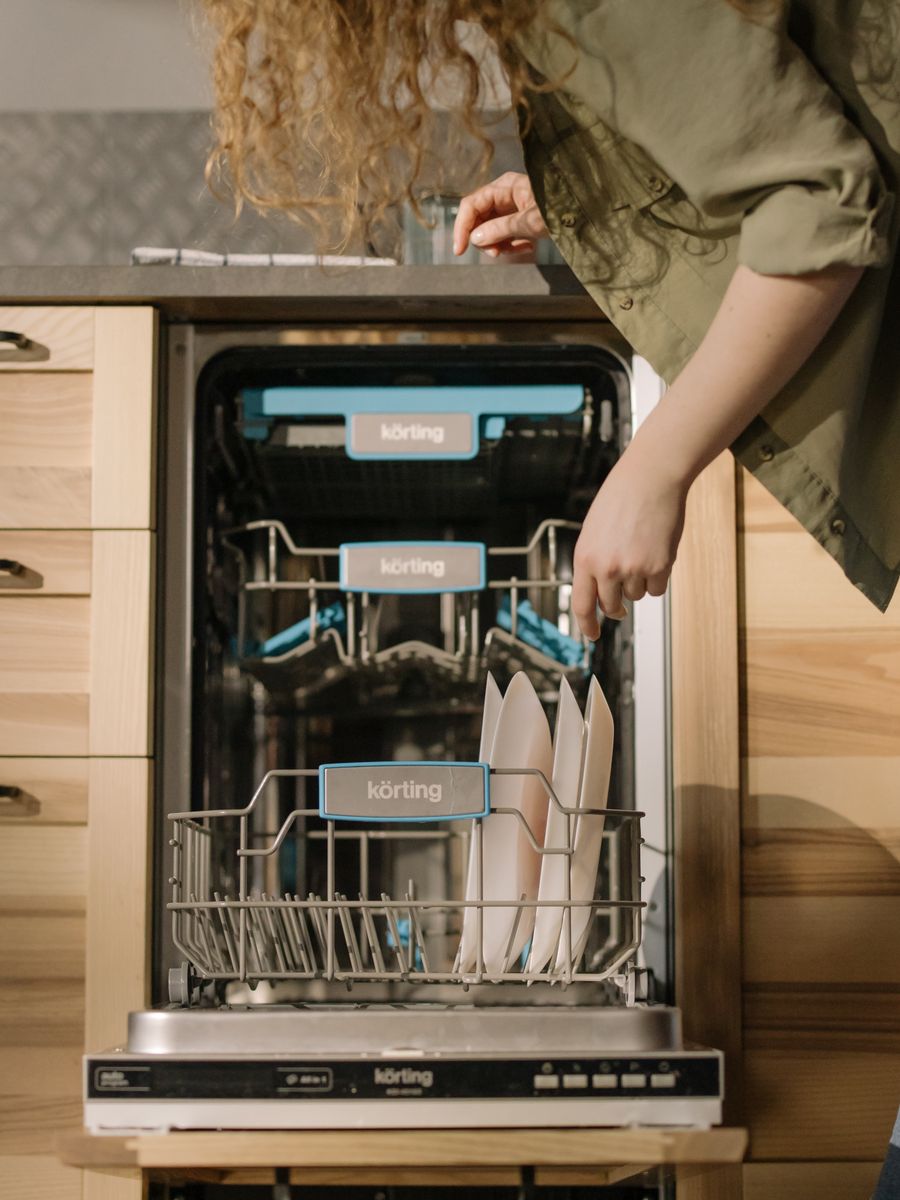
Most kitchen dishwashers drain into the garbage disposal unit under the sink. If the disposal is clogged with food waste, the dishwasher water has nowhere to go and backs up into the tub. This is one of the most overlooked causes because homeowners often don't connect the two appliances in their mind.
What to check
Run the garbage disposal for 15 to 20 seconds with cold water flowing. If it sounds strained or barely spins, it may be jammed. Clear the jam (with the power off) using an Allen wrench in the bottom port, then try running it again. If you recently had a new garbage disposal installed, check whether the installer removed the knockout plug from the dishwasher inlet port. This plug blocks the connection by default and must be punched out before connecting the dishwasher drain hose. A missed knockout plug is a surprisingly common cause of drainage failure after a disposal replacement.
If your dishwasher started failing to drain right after a new garbage disposal installation, the knockout plug is almost certainly the cause. A technician can remove it in minutes.
4. Faulty Drain Pump
The drain pump is the component that forces water out of the dishwasher and through the drain hose. It uses an impeller (a small rotating blade) to push water at high pressure. If the pump motor burns out, the impeller breaks, or debris jams the mechanism, the pump cannot move water and the tub stays full.
What to check
Listen during the drain phase of the cycle. A working pump produces a steady humming sound as it pushes water out. If you hear nothing during the drain cycle, or if you hear a loud grinding or buzzing noise, the pump may be damaged. A complete lack of sound can also indicate a wiring or control board issue. Drain pump diagnosis and replacement require removing the dishwasher's bottom panel and working with electrical connections, so this is a job for a qualified technician.
5. Defective Check Valve or Drain Solenoid
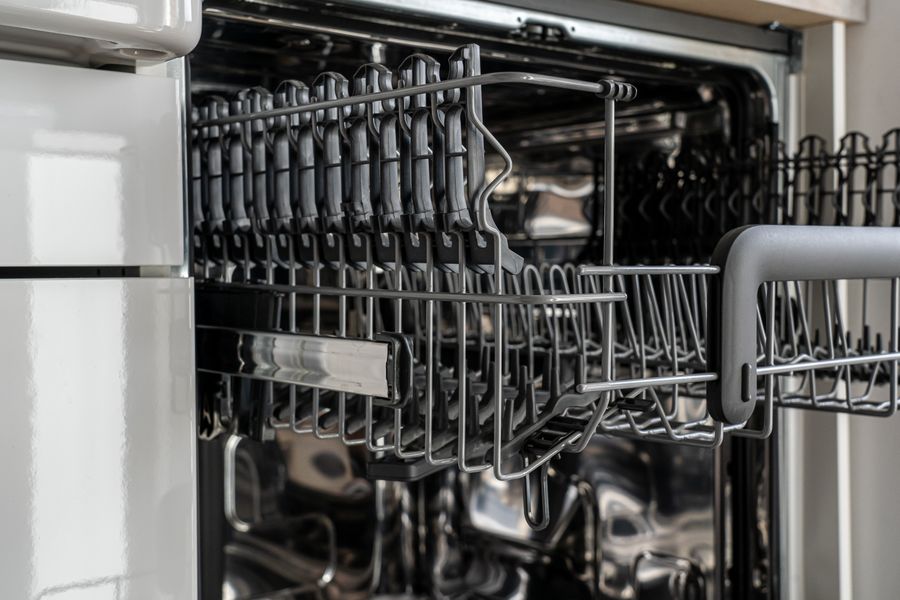
The check valve (also called a flapper valve) sits at the drain outlet and prevents drained water from flowing back into the tub. When this valve gets stuck or fails, water re-enters the dishwasher after the pump shuts off. Some older dishwasher models also use a drain solenoid, an electrically controlled valve that opens to let water pass during the drain cycle. If the solenoid fails, the valve stays closed and water cannot exit.
What to check
If you notice that the dishwasher drains partially during the cycle but has standing water again by the time you open the door, a failed check valve is a strong possibility. Water is draining out and then flowing right back in. A stuck or broken drain solenoid, on the other hand, prevents any water from leaving in the first place. Both components are located inside the pump assembly and require disassembly to access. A technician can test the solenoid for electrical continuity and inspect the check valve for debris or damage.
When to Call a Professional
Cleaning the filter, clearing the drain hose, and running the garbage disposal are all safe first steps you can take on your own. These simple checks resolve the majority of dishwasher drainage problems. But if the issue persists after these steps, a professional should take over. Problems involving the drain pump, check valve, drain solenoid, or control board require disassembling the dishwasher and working with electrical components.
A trained technician can accurately pinpoint the root cause, replace the correct part, and test the full drain cycle before leaving. Attempting internal repairs without the right tools and experience can lead to water leaks, electrical hazards, or further damage to the appliance.
Serving the East Bay. Swift Appliance Repair provides same-day dishwasher diagnostics and repair across Concord, Walnut Creek, Pleasant Hill, Martinez, and the surrounding area. All work is backed by our 90-day labor warranty.